Author: Sino-Euro Logistics Editorial Team
Reviewed by: Sino-Euro Logistics Editorial Team
Published: 2026-05-12
Last reviewed: 2026-05-12
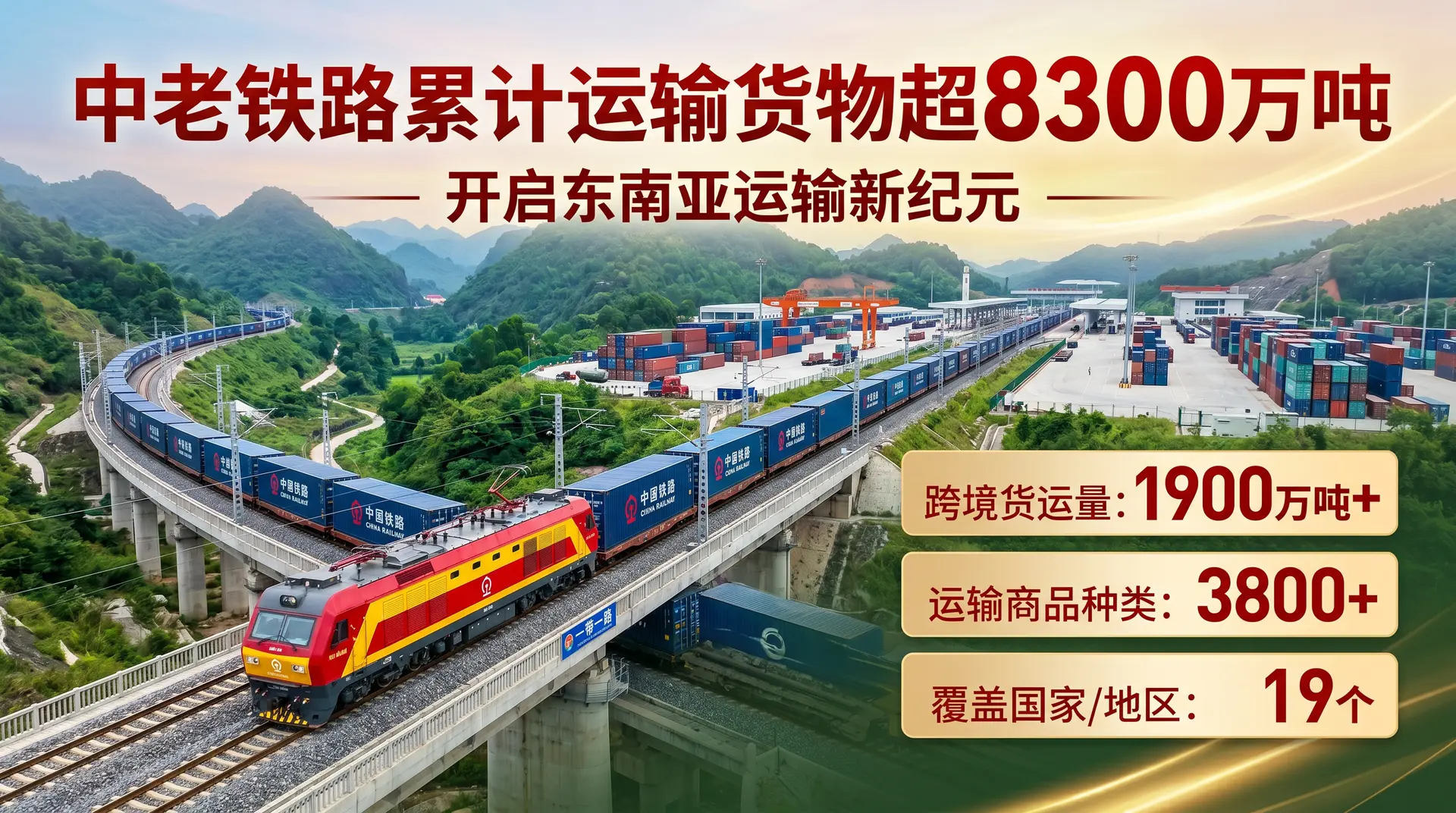
The China-Laos Railway's cumulative freight exceeded 83 million tons with ASEAN fruit cross-border rail growing.
A growing cross-border freight corridor
The May 2026 Chinese article reported that cumulative freight on the China-Laos Railway had reached 83.207 million tonnes by 6 May. The milestone reflects the corridor's expanding role in regional trade, from industrial inputs to agricultural and consumer goods. It is a historical cumulative figure, not the volume carried in a single year.
Fruit logistics is becoming more important
The article reported more than 50,000 tonnes of imported durian carried during January-April 2026, up 94.2% year on year. Growth in this category brings different operational requirements from those of many industrial raw materials: temperature control, transfer timing, inspection arrangements and onward distribution become central to the transport plan.
The original report linked this development to cold-chain improvements at Mohan and better coordination of the cross-border movement. Rail can support larger, scheduled batches, but a lower unit transport cost is only useful if the product remains within its required temperature and delivery window.
Assess the whole cold-chain operation
For perishable cargo, confirm product eligibility, packing, temperature requirements, inspection and quarantine documents, terminal handling and the onward road connection before choosing a departure. Time outside controlled conditions and delays at handover points need to be included in the assessment.
The growth in fruit traffic illustrates a wider change in the cargo mix. It does not mean that all fresh products can use the same equipment, documentation or service. Each shipment needs its own feasibility and acceptance check.
Connecting ASEAN supply chains with wider markets
China-Laos-Thailand logistics connections can form part of a broader multimodal plan involving China and, where feasible, onward China-Europe freight. Such a plan can require transfers, separate bookings and additional customs procedures. It should not be understood as a single uninterrupted through-train from every ASEAN origin to Europe.
For businesses comparing regional sourcing and distribution options, the useful questions are the reliability of each connection, the overall lead time, handling requirements and total cost. A strong main-line corridor still needs a practical first and last mile.
Planning the next shipment
Provide the origin and destination, commodity, volume, packing, ready date and delivery requirement. For temperature-sensitive goods, include the required temperature range and supporting technical information. Sino-Euro Logistics can assess whether a rail-road or other multimodal arrangement fits the shipment, subject to current service availability and regulatory requirements.
Sources & editorial note
This article reflects the information and reporting period identified in its text. Source links, where available, are included in the article. Verify rates, transit times, customs rules and market figures against the latest carrier or official authority information before making a shipment decision.
Editorial review covers terminology, clarity and basic consistency. It is not legal, tax or customs advice and does not constitute a fixed quotation.
Planning a China-Europe shipment?
Share your origin, destination and cargo details for a shipment-specific assessment.
Request a freight quote