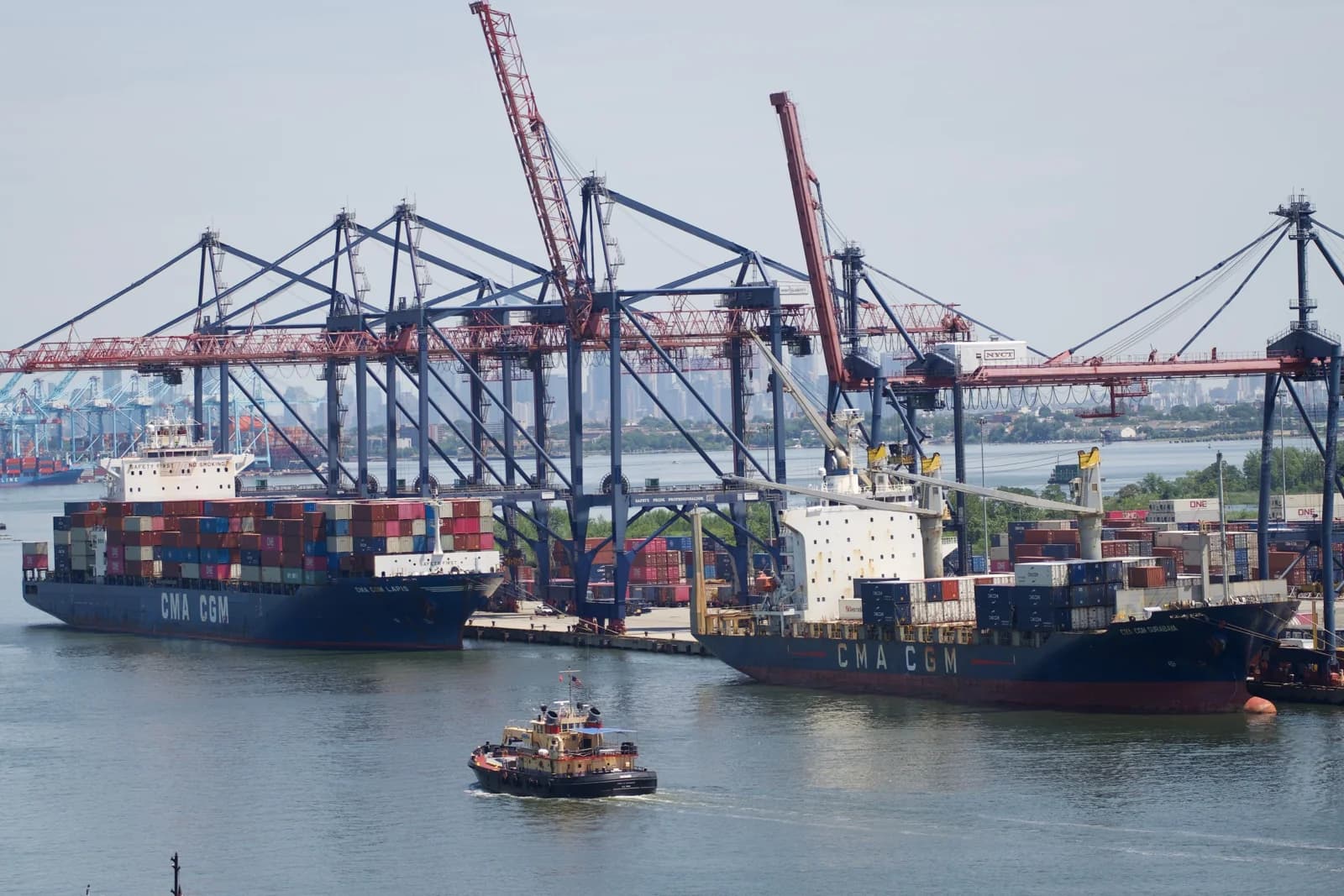
Cover photo: container ships and quay cranes. Stock photograph by David Burns / Pexels.
A container shipped from China to Europe can be affected by Middle East disruption even if it never enters the Persian Gulf. Exposure depends on more than the vessel's route. Fuel costs, vessel turnaround and transhipment arrangements can carry the effects of regional disruption into other services.
Maersk's third-quarter results, published on 5 November 2026, describe that connection. The company said disruption in the Strait of Hormuz and wider network congestion increased bunker, network and container-handling costs and affected schedule reliability. This was an account of third-quarter operations, not a November quotation for a particular route. Maersk's 5 November announcement
Identify the waterway before judging the route
The Strait of Hormuz, Bab el-Mandeb and the Suez Canal are separate transit points. Describing them collectively as a closed Middle East shipping route can give shippers the wrong picture of their China–Europe shipment.
In its 1 November advisory, with an information cut-off of 13:00 UTC, the Joint Maritime Information Center recorded depressed traffic through Hormuz. The same report said Bab el-Mandeb remained open to commercial shipping but volatile. It reported no confirmed attacks or disruptions in the northern Red Sea or Suez Canal during the preceding 72 hours. JMIC Advisory Update 110
Those are dated observations, not a guarantee of conditions on departure day. For an individual shipment, check the carrier's intended routing, port calls and transhipment arrangements. An open waterway does not mean the booked sailing will use it.
Costs can change before the route does
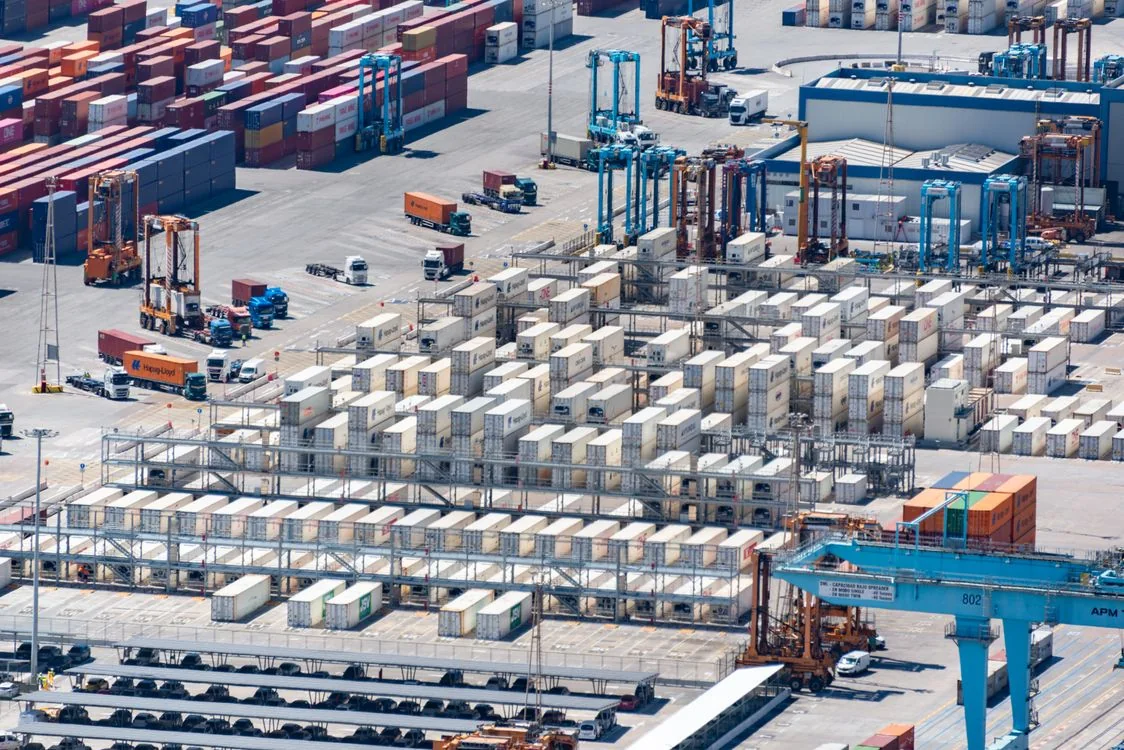
Time spent waiting at one port reduces the time available for a vessel's next voyage. A disrupted connection may also require changes to feeder schedules and container availability. These are practical ways for regional disruption to affect a wider shipping network without every vessel entering the affected waters.
Separate the base freight rate from included surcharges and charges that may be triggered later. Compare quotations on the same port pair, equipment type, shipping date and scope. Regional tension alone does not establish that an additional charge is justified; equally, avoiding the Persian Gulf does not remove the need to read the quotation's adjustment clauses.
Check whether the transport arrangement has changed as well. Is a direct service being replaced by transhipment? Has the connecting port changed? Who bears the cost of rerouting? These details are more useful for a shipment budget than a broad prediction about freight rates.
European demand gives a mixed signal
Supply disruption does not necessarily mean demand is strengthening at the same time. Maersk also described softer growth in European import demand in the third quarter. Maersk's quarterly operating review
Germany's Federal Statistical Office published another useful distinction on 5 November. According to its provisional data, real manufacturing new orders rose 4.4% in September from August after seasonal and calendar adjustment. The third quarter as a whole was only 0.2% above the second quarter. These figures measure German manufacturing orders, not Chinese export volumes or November bookings. A monthly rebound is therefore an insufficient basis for increasing stock across every product category. Destatis manufacturing orders release
Over the month ahead, watch for changes to specific services, shorter quotation validity and actual replenishment orders from customers. Better transit conditions and port turnaround could ease supply pressure. Continued disruption could keep costs under pressure even on routes with modest demand.
For cargo already planned, put the routing, charge-adjustment conditions and required delivery date into one transport confirmation. Whether to keep the ocean booking, send a small urgent portion separately, or compare rail and air options should follow from the delivery gap on that order.
For a closer look at quotation comparisons, read our November Europe-bound booking analysis. Review our ocean freight services or provide cargo and delivery details on the enquiry page.